Same Office. Different Job.
The UN’s Real Crisis Isn’t Reform. It’s Mismatch.
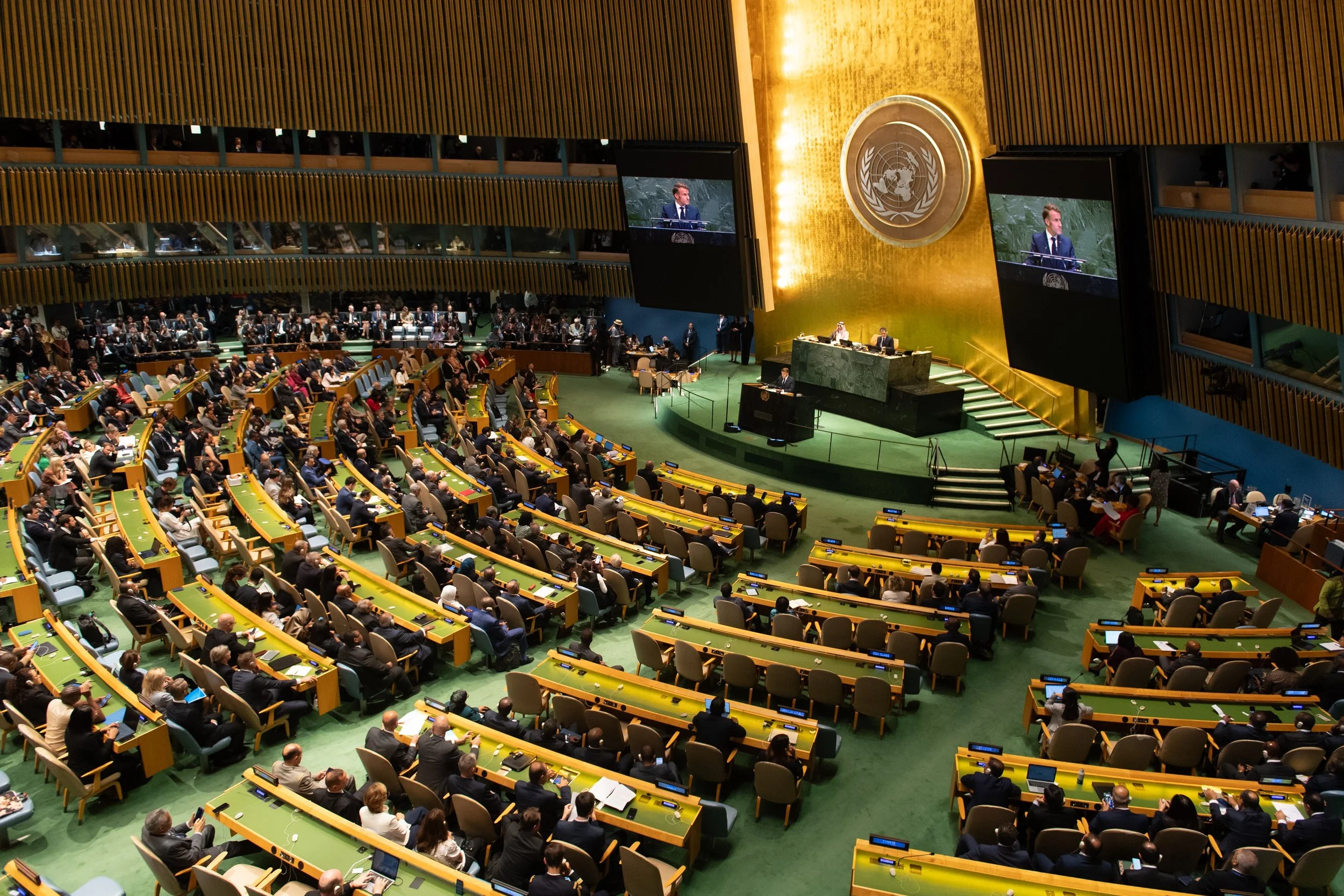
Image: Noamgalai Photographer / Shutterstock
Published August 4, 2026
By Naseem Qader
Whoever becomes the next Secretary-General will inherit more than an institution.
They will inherit expectations no previous Secretary-General has ever carried.
Much of the discussion around the transition will center on the person chosen for the role. Can they bridge the distance between Washington and Beijing? Can they restore confidence in an institution many governments have grown impatient with? Can they manage a Security Council that has spent years struggling to agree on the basics?
Those are fair questions. They are also, I think, the wrong ones to ask first.
As António Guterres prepares to leave office after a decade, the selection process for his successor is already in its final stretch — candidates vetted, the Security Council reviewing, with a General Assembly town hall days away — with the winner set to take office January 1, 2027. Whoever it is will step into a role that looks, on paper, identical to the one Guterres held when he started.
The more revealing question is whether the office itself has quietly changed — whether the next Secretary-General is stepping into the same job as the last one. The issue is not who leads the United Nations. What matters is whether the United Nations still has a job that leadership alone can deliver.
Not a leadership problem, in other words. Not even, mainly, a reform problem. The institution was built for one world. It has been asked, gradually and almost without anyone deciding so, to govern another.
The United Nations was never intended to solve every global problem. It was created for something narrower and, at the time, extraordinarily ambitious: to reduce the likelihood of catastrophic conflict by giving countries a place to negotiate, cooperate, and keep talking even when agreement seemed impossible.
That purpose has not disappeared. But it is no longer the only measure by which the institution is judged.
Today’s defining challenges rarely arrive wearing a flag. A cyberattack launched from one country can disable hospitals in another within minutes. A virus crosses continents before governments fully understand what they are confronting. Artificial intelligence is developed in one jurisdiction, deployed in another, and affects billions who had no voice in setting the rules. Supply chains break across oceans. Wildfires, droughts, floods, and extreme heat ignore political boundaries. Financial shocks spread through markets long before diplomats gather around a table.
These problems share something important. They do not stop at borders. Nor do they fit neatly within institutions built to manage relations between sovereign states.
For much of the twentieth century, the world’s greatest risks came primarily from the actions of governments. Today, many of the risks that shape daily life come from networks, technologies, markets, and ecosystems that connect societies more tightly than governments ever intended them to be connected. The world did not simply become more interconnected. It became more interdependent.
That is a different kind of reality, and it changes what societies expect from the institutions meant to manage it. It is no longer enough to offer a forum for diplomacy after a crisis erupts. Increasingly, the expectation is that an institution will help anticipate risk, coordinate response, and sustain cooperation across problems no single government can manage alone.
None of this happened because someone rewrote the United Nations Charter. It happened because the world changed around it. As each new challenge emerged, another expectation was added — climate, public health, digital technology, human rights, terrorism, sustainable development, artificial intelligence. The institution rarely traded one mission for another. It simply inherited more of them.
When critics argue that the United Nations is trying to do too much, they are not entirely wrong. When supporters argue that the world needs it more than ever, they are not entirely wrong either. Both can be true at once. The institution has not simply become larger. The assignment has become wider. That’s the mismatch: not a bigger United Nations, but a wider job.
That distinction changes how the addition happened. Nobody voted to expand the United Nations’ mandate all at once. Governments added one responsibility at a time, each addition reasonable on its own, none of them retired once granted. The result is a pattern more like inflation than crisis — not a single shock but a slow compounding, each year’s expectation stacking on the last.
The institution still holds something almost no other body has: near-universal legitimacy. Nearly every government still wants a seat at the table, and even its sharpest critics rarely argue for abandoning it altogether. But legitimacy has not translated into proportional authority.
Member states keep asking it to take on more than a single body can plausibly deliver, without granting the resources or political mandate that would make delivery possible. The gap between what it is asked to do and what it is empowered to do keeps widening.
Every reform proposal eventually meets the same wall: countries that benefit from the current arrangement are rarely willing to trade any of their own leverage to change it. So far, none have. The United Nations cannot become stronger than its member states are willing to let it become, and that single constraint outlasts every negotiating round.
Its financial strain is a symptom of that same standoff, not a separate problem. Budget reductions and staff relocations, part of the ongoing UN80 consolidation effort, may make the institution more efficient. They cannot resolve a disagreement that was never really about money — the older, unsettled question of what governments actually want the institution to do, and how much of their own authority they are willing to lend it.
None of this makes the United Nations unique. Universities are being asked to do the work of research labs, credentialing bodies, and public health infrastructure at once. Central banks, built to manage currency and inflation, are being pulled into climate risk and financial stability questions that cross borders they were never designed to police.
Alliances built to deter one kind of war now find themselves negotiating over cyber norms and critical infrastructure. Democratic governments elected to manage domestic affairs are asked to answer for global supply chains, migration flows, and platforms headquartered somewhere else entirely.
It shows up anywhere a twentieth-century institution meets a twenty-first-century job. Institutions don’t become obsolete when they grow old. They become obsolete when the world changes what it needs them to do, faster than anyone redesigns them to do it.
That is the deeper story behind the coming transition. The next Secretary-General will not be judged only on negotiating skill, though that will matter. They will be judged on an assignment that has quietly grown larger than any single office was built to carry — and that no election, however consequential, can resize on its own.
Before the United Nations can be reformed, the world may first need to decide what it is actually asking the institution to become. Until that question is answered, every Secretary-General inherits the same widening distance: the architecture of 1945, carrying the assignment of 2027.
Naseem Qader is a strategist and writer exploring how culture, narrative, and emerging technology shape power and perception. Through her platform, The Global Rewrite™, she connects ideas across systems, regions, and imaginations to reframe diplomacy, influence, and the way the world understands itself.
The views and opinions expressed here are those of the author(s) and do not necessarily reflect the official policy or position of the Pacific Council.
