The Pacific as Earth’s Operating System
How a Rim of Ports, Protocols, and People Is Teaching the World to Think Like a Network
By Naseem Qader
The Pacific Ocean is no longer a background; it has become the planet’s processor—an oceanic network of trade, data, weather, and imagination. Subsea cables now carry nearly 99 percent of the world’s intercontinental data traffic, according to the European Union Institute for Security Studies. Satellites, ports, and shipping routes form a second nervous system above it. What once carried myths now carries metadata.
If the ocean already routes what we move and know, the next step is to see how it coordinates how we act.
CLAIM NETWORK SOVEREIGNTY
The Pacific is becoming a planetary coordination system—an intelligence architecture teaching humanity how to adapt under pressure. It behaves less like territory and more like software—updating itself through movement, sensing disruption, and restoring balance. Its code is written in currents, its logic in tides.
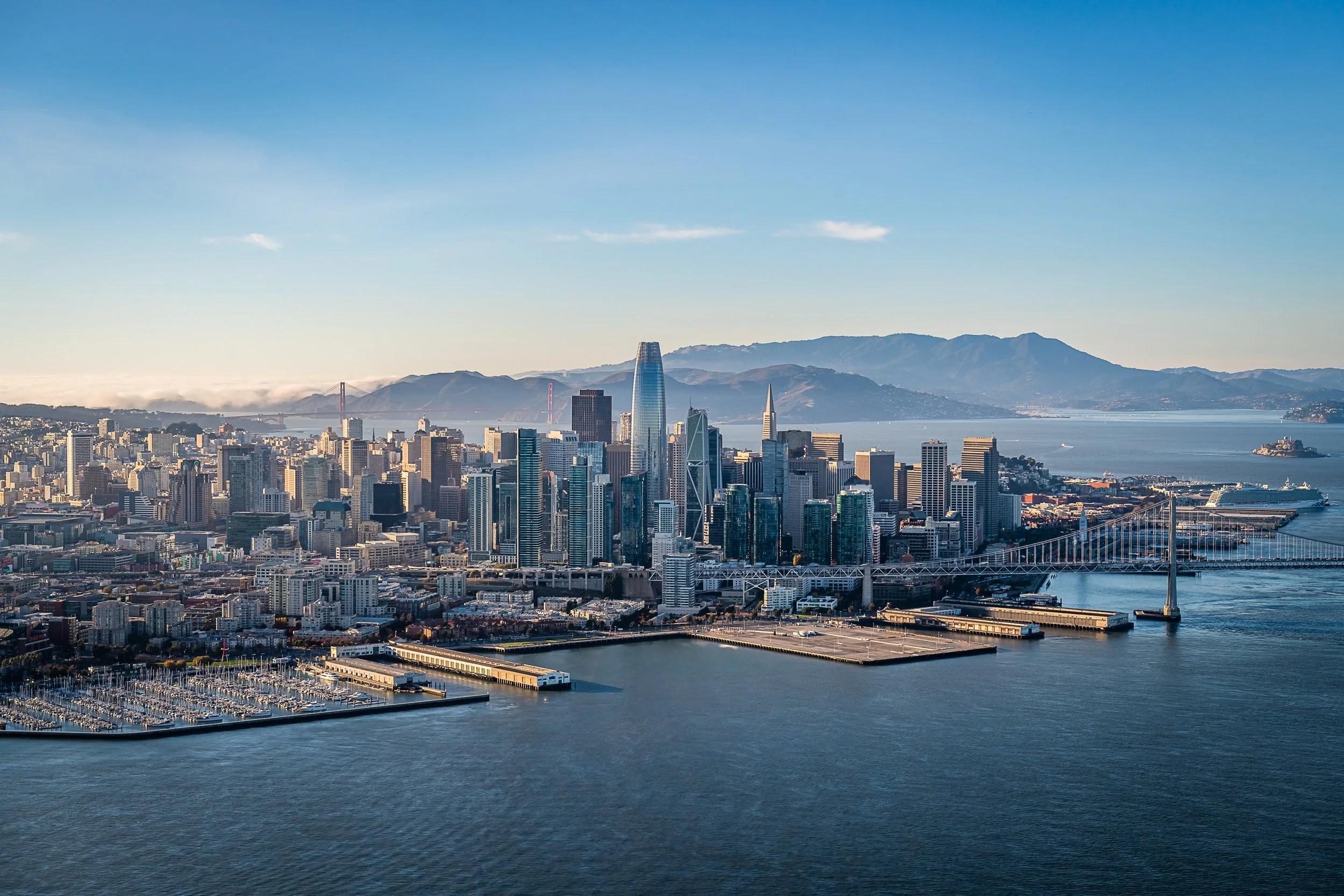
And on one western shore of that network, California quietly translates oceanic logic into policy, innovation, and design—rendering the Pacific’s distributed intelligence into a form that works. Through a whole-of-state approach, California’s Ocean Protection Council integrates marine science, coastal adaptation, and climate diplomacy into governance. The Port of Los Angeles leads a major zero-emission port program with basin-wide impact, while Scripps Institution of Oceanography turns ocean data into actionable climate intelligence.
Across the basin, circulation itself has become diplomacy: El Niño redistributes heat from Peru to Indonesia; fiber mirrors those paths with information; ships follow with goods. Connection becomes capacity; capacity becomes coordination.
Which raises the design question: what shared assets and standards make this durable?
DESIGN THE COMMONS
Where the Atlantic once perfected architecture—treaties, institutions, hierarchies—the Pacific refines adaptation: cooperation grounded in relationship and feedback. Japan’s hydrogen diplomacy, New Zealand’s recognition of the Whanganui River as a living entity, Fiji’s climate leadership at the United Nations, and Chile’s transparency experiments function like iterative patches in a shared regional code. In practice, maritime cooperation—like recent Japan–U.S.– Philippines coast-guard drills— standardizes communication and safety protocols to reduce miscalculation at sea (Associated Press). The UN Economic and Social Commission for Asia and the Pacific and the Asian Development Bank both show that resilience now rests on integrated economic, environmental, and digital cooperation.
The next test is simple: can reciprocity be run as procedure, not promise?
INSTITUTIONALIZE RECIPROCITY
Systems that cooperate ecologically also learn collectively—what the Atlantic once did for law, the Pacific is now doing for intelligence. Each forecast, treaty, and data-sharing pact adds to an emergent cognition: the region is learning to think together. This “oceanic intelligence” measures not GDP or territory, but responsiveness—the capacity to coordinate across volatility. When governments, cities, and communities align climate data with moral consequence, they practice diplomacy as design.
Peace looks pragmatic when reciprocity becomes procedure. In Fiji, relocation is funded and dignified through the Climate Relocation of Communities Trust Fund (Government of Fiji). In Mindanao, the Peace Corridor established protected humanitarian routes by coordinating across former front lines (PeaceGovPH). And in Aotearoa, legal personhood for rivers reframes ecology as kinship, guided by the Te Arawa Lakes Trust principle of kaitiakitanga—reciprocity as governance.
To last, these practices need wiring—finance, standards, and institutions.
This moral algorithm is the Pacific’s greatest export. It teaches that sustainability is not a program but a practice of attention.
ENGINEER PEACE
Across the Rim, governments, cities, and coastal economies are building the architecture of coherence—civic, scientific, and financial conduits through which Pacific ideas become institutions. Design governance from Singapore’s Centre for Liveable Cities applies systems thinking to urban policy and collaboration (CLC), while Korea’s Korean New Deal mobilizes public–private consortia for green and digital infrastructure (Ministry of Economy and Finance). As set out in the Blue Pacific Strategy, regional integration is now a mode of survival, not an aspiration (Pacific Islands Forum Secretariat).
Seen from orbit, the Pacific glows—ports, cables, vessels, satellites—an organism flickering in thought—its infrastructure visible from space. Here, the boundary between ecology and economy has dissolved. As the Indo-Pacific becomes the strategic hinge of this century, the Pacific itself is becoming its conscience. What this basin reveals is civilizational instruction: survival will belong to those who can sense together, respond together, and imagine together. This is governance as perception—states acting less like machines and more like neurons, linked by empathy and information.
The Pacific is teaching the world to think together. The question is whether we are ready to learn.
On the western edge, California stands where fiber meets tide—quiet, poised, translating ocean logic into democratic action. The Atlantic gave the world its institutions; the Pacific may yet give it its consciousness. One built structures of stability; the other is building structures of sense. And somewhere along this arc, convergence is already happening—architecture meeting atmosphere, structure meeting soul.
The operating system is already running—it waits for us to learn its code. The ocean is not merely rising—it is remembering. In that memory lies a blueprint: not for dominance, but for design; not for control, but for coherence.
The next world order may not be written in charters or decrees, but in the logic of coordination—an order that adapts, learns, and thinks as one.
Naseem Qader is a strategist and writer exploring how culture, narrative, and emerging technology shape power and perception. Through her platform, The Global Rewrite™, she connects ideas across systems, regions, and imaginations to reframe diplomacy, influence, and the way the world understands itself.
The views and opinions expressed here are those of the author(s) and do not necessarily reflect the official policy or position of the Pacific Council.
